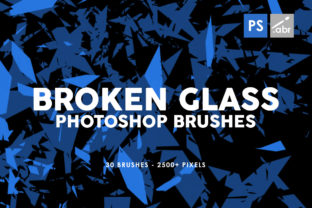
Shattering Expectations: Real-World Applications for 30 Broken Glass Photoshop Brushes 1
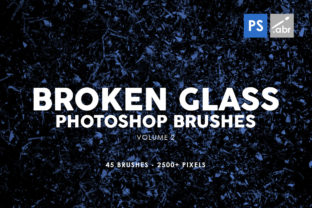
There is a specific kind of tension that a shard of glass introduces to a visual composition. It implies danger, fragility, sudden impact, or perhaps a breakthrough moment. For digital artists and photo manipulators, capturing that realistic texture without spending hours painting individual cracks or hunting down stock photos can be a massive bottleneck. This is where the 30 Broken Glass Photoshop Brushes 1 set becomes an invaluable asset in your creative toolkit. Unlike generic overlay packs that often feel flat or repetitive, this collection offers thirty distinct variations of shattered textures, all rendered at a crisp 3000 pixels. That resolution ensures that whether you are designing a billboard or a mobile wallpaper, the edges of those shards remain sharp and convincing.
The true value of these brushes lies not just in their technical specifications, but in how they solve common creative problems across various industries. When you are working on a high-stakes project, time is often your most scarce resource. Having a reliable set of high-resolution glass textures that work seamlessly with any version of Photoshop allows you to pivot quickly from concept to execution. Let's explore how different creators are leveraging these tools to elevate their work beyond standard digital edits.
Transforming Photo Manipulation and Surreal Art
For photo manipulators, the line between reality and fantasy is often drawn by texture. A portrait that looks too clean can feel sterile; adding elements of destruction or decay can inject narrative depth. Imagine a campaign for a mental health awareness initiative where the subject appears to be breaking free from constraints. Using the 30 Broken Glass Photoshop Brushes 1, an artist can layer shards over a subject's silhouette to symbolize shattering stigma. Because the brushes are high resolution, you can scale them up or down without losing the intricate details of the fracture lines, which is crucial when blending them into high-megapixel photography.
Surreal artists also benefit immensely from the versatility found inside this pack. The thirty unique designs mean you aren't forced to use the same "spiderweb" crack pattern on every piece. Some brushes feature large, jagged chunks suitable for depicting a violent impact, while others offer finer, dust-like particles perfect for atmospheric effects. You might create a scene where a character is walking through a floating window frame, with glass raining down around them. By adjusting the opacity and blending modes—such as Screen or Overlay—you can make the glass interact naturally with the lighting of the underlying photograph, creating a cohesive illusion rather than a stuck-on sticker.
Elevating Graphic Design and Advertising Campaigns
In the commercial sector, particularly in advertising for technology, automotive, or security products, the aesthetic of broken glass carries specific connotations. It can represent durability testing (what happens when the screen hits the floor), security breaches (shattered windows), or even the "breaking" of old paradigms in a tech launch. Designers often struggle to find stock imagery that fits their specific layout without requiring extensive masking. These brushes eliminate that hassle. You can paint the exact shape and density of the breakage needed to fit around a product shot or a headline.
Consider a poster for an action movie or a thriller novel. The title treatment needs to pop, and surrounding it with subtle glass fractures can add immediate genre context. Since the brushes are 3000 pixels wide, they hold up well in print media. A designer could place a large shard across the corner of a magazine spread, allowing text to wrap around it or sit behind it for a layered 3D effect. The ability to rotate and transform each brush stroke means no two projects have to look alike, preventing the "cookie-cutter" look that plagues many ad campaigns relying on overused stock assets.
Enhancing Digital Art and Concept Design
Concept artists working in gaming or film pre-production often need to visualize damage states for environments. Whether it's a post-apocalyptic cityscape or a sci-fi laboratory after an explosion, broken glass is a ubiquitous element of destruction. Painting this manually is tedious and often lacks the random organic nature of real fracturing. With 30 Broken Glass Photoshop Brushes 1, an artist can rapidly block out damage scenarios. They can quickly iterate on how light passes through different thicknesses of glass or how debris scatters on the floor.
Digital painters also use these textures to add grit to otherwise smooth illustrations. A cyberpunk character portrait might feel too polished until a few cracked glass overlays are added to the foreground, simulating the view through a damaged visor or a rain-slicked window. This adds a layer of storytelling and atmosphere that engages the viewer immediately. The high resolution ensures that when the artwork is zoomed in for detail work, the texture doesn't pixelate, maintaining the professional quality required for portfolio pieces and client presentations.
Practical Considerations for Integration
While the 30 Broken Glass Photoshop Brushes 1 set is robust, getting the best results requires a bit of artistic intuition. One common consideration is lighting consistency. Even the highest quality brush will look fake if the direction of the highlights on the glass shards contradicts the light source in your base image. Before applying the brush, take a moment to analyze where the light is coming from in your composition. You may need to flip the brush horizontally or vertically to match the refraction angles.
Another factor is color grading. Glass is rarely just white or gray; it reflects the environment around it. After stamping a brush onto your canvas, don't be afraid to use adjustment layers like Color Balance or Curves to tint the glass slightly blue, green, or warm, depending on the scene's mood. Because these brushes work with any Photoshop version, users on older systems don't have to worry about compatibility issues, but those on newer versions can take advantage of advanced blending options like "Blend If" sliders to seamlessly integrate the white parts of the glass into complex backgrounds without manual erasing.
Why Resolution and Variety Matter
The specification of 3000 pixels is not just a number; it is a guarantee of longevity for your assets. In an era where 4K monitors and high-DPI displays are standard, low-resolution textures stand out immediately. Many free brush sets top out at 1000 or 1500 pixels, which forces you to keep them small or accept a blurry mess when scaled. This collection removes that limitation, giving you the freedom to use a single shard as a massive foreground element dominating the frame.
Furthermore, having thirty distinct brushes prevents visual fatigue. If you are working on a series of images, such as a social media campaign or a comic book sequence, using the same crack pattern repeatedly breaks immersion. The variety within this pack ensures that each application feels unique. From fine hairline fractures to massive structural failures, the range covers the spectrum of glass behavior. This diversity allows you to tell more nuanced stories—a small chip suggests a minor accident, while a web of deep cracks implies a catastrophic event.
Ultimately, tools like 30 Broken Glass Photoshop Brushes 1 are about removing friction from the creative process. They allow you to focus on the story you are telling and the emotion you want to evoke, rather than getting bogged down in the mechanics of texture creation. Whether you are a seasoned retoucher looking to add edge to a fashion spread, or a hobbyist experimenting with dark surrealism, these brushes provide the realistic foundation needed to make your digital creations feel tangible and impactful.